Upload a photo and get a realistic result in seconds



Drag the slider: the original photo on the left, the AI result on the right




Pick a style and the AI does the rest — no complex settings, no waiting



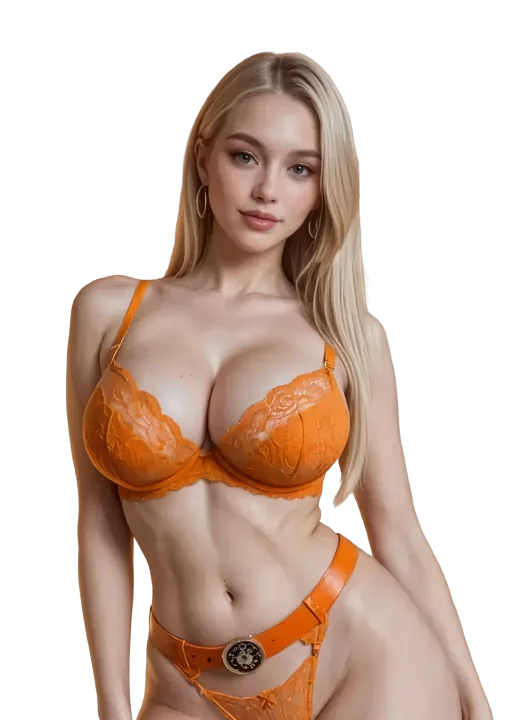
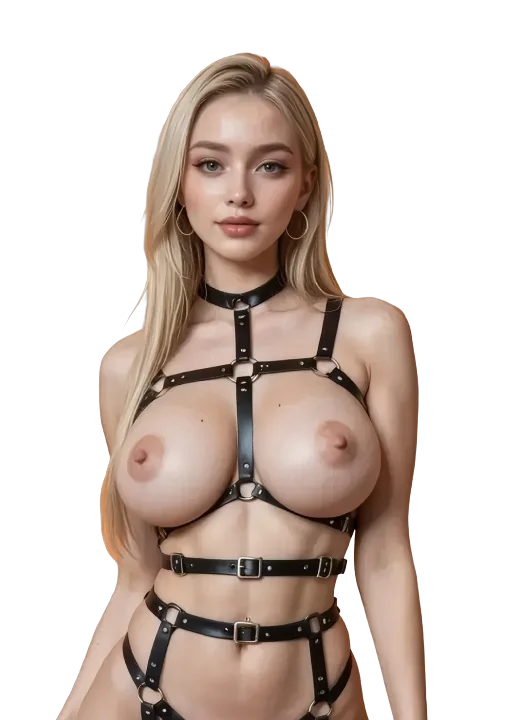
Pick a style, pose or scene — the AI creates realistic content from your photo
You can undress any photo in a few clicks — and your first sign-in comes with gift tokens
Create an account in a couple of clicks with email or social login
Sign in with Telegram or Google — gift tokens are credited right away as a discount on your first generation
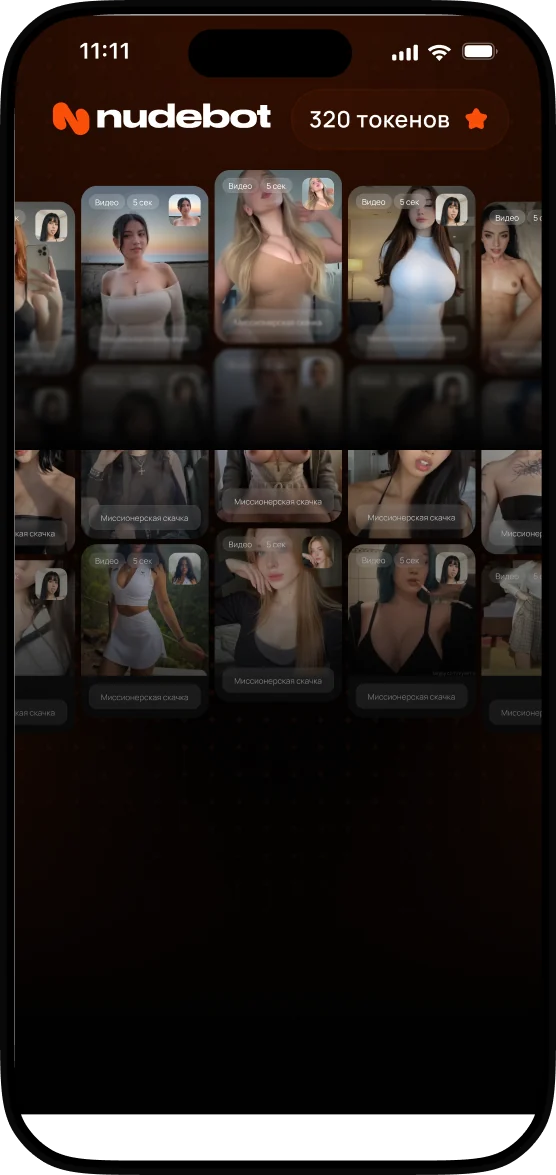
Upload a photo, pick a scene and get a ready photo or video
Everything you need to know about NudeBot
What visual cues should I look for to identify a deepfake in a photo?
How can I detect a deepfake in a video, focusing on motion and sound?
Are there reliable technical tools to help identify deepfakes?
What are the main risks associated with deepfakes?
How can I protect myself and others from deepfake abuse, especially concerning adult content?
How to Recognize a Deepfake: Practical Guide for Checking Photos and Videos
Deepfake attacks increased by 31 times in 2023, and today a deepfake attack occurs somewhere in the world roughly every 5 minutes. Whether you are a content creator, a business professional, or simply someone who values digital safety, knowing how to spot synthetic media is now a core skill. This guide walks you through visual cues, audio checks, detection tools, and consent-aware practices so you can confidently evaluate any suspicious photo or video.
Quick answer: how to recognize a deepfake in a few seconds
If a photo or video looks too perfect, feels emotionally shocking, or shows a person doing something completely out of character, treat it as high-risk. Content designed to provoke strong reactions - outrage, desire, disbelief - is exactly the kind of material bad actors weaponize. Users who search for как распознать дипфейк or что это дипфейк should know that no single visual trick catches every fake; deepfake detection requires a comprehensive approach that includes visual analysis, audio checks, and source verification. Detection relies on human intuition in conjunction with technological tools and algorithms, so combining your own attention with a reliable service для проверки gives the best results.
Run through these fast checks before trusting or sharing anything:
- Eyes and teeth - look for asymmetrical pupils, mismatched catchlights, or oddly aligned gums.
- Lighting - shadows on the face should agree with shadows on the body and background.
- Skin texture - overly smooth, "plastic" skin with no visible pores is a red flag.
- Hair and ears - watch for smearing, warping, or disappearing accessories like earrings.
- Audio-lip sync - speech that drifts ahead of or behind lip movement signals manipulation.
- Emotion flow - expressions that jump unnaturally or a forehead that stays frozen while the mouth smiles.
For any suspicious content, run a deepfake detector and perform a quick reverse image search. Also keep in mind that creating or sharing intimate deepfakes of real people without consent may violate privacy laws, image-rights statutes, and criminal codes in many jurisdictions.
What is a deepfake and how it works
A deepfake is synthetic media created using artificial intelligence - specifically deep learning algorithms designed for content generation. The term combines "deep learning" and "fake" and was first popularized in 2017 on Reddit, where early face-swap videos demonstrated what the technology could do. Today, users asking что такое дипфейк should understand that deepfakes can imitate images, videos, or audio recordings with startling realism.
Deepfake models are trained on millions of image frames. Voice deepfakes require datasets of recorded conversations to reproduce tone, cadence, and accent. С помощью architectures like GANs, diffusion models, and encoder-decoder face-swap pipelines, these systems learn to reconstruct a target identity in new poses and lighting conditions - and deepfake generation can be done in seconds using simple tools. The training data для обучения these models now spans видео и аудио, enabling multi-modal output.
Real-world examples range from entertainment to education. Deepfakes are used in cinema to resurrect deceased actors, and in 2021 Bruce Willis appeared in Megafon ads as a deepfake. The technology can also create realistic educational videos without studios. On the darker side, the viral 2023 "Pope in a white puffer jacket" image showed how convincingly a single AI-generated photo can fool millions. Modern models generate not only faces but entire scenes - bodies, backgrounds, clothing - in фото и видео, making fakes harder to spot by eye.
Main risks and legal context of deepfakes
Deepfakes have legitimate creative applications и другие beneficial uses in film, marketing, and education, but the risks scale directly with quality improvements. Deepfakes complicate trust in media due to their potential for high realism, and abuse scenarios are multiplying.
Common threats include:
- Financial fraud - In 2023, a Hong Kong employee lost $25 million to deepfakes when criminals impersonated company executives on a video call. Deepfake scams caused losses of $25 million that year. In 2023, deepfake-related fraud increased by 31 times.
- Phishing and identity theft - Deepfakes can be used for phishing and identity theft by mimicking trusted voices during phone calls or video conferences.
- Blackmail - Deepfakes can create compromising materials for blackmail, targeting both public figures и не only them - private individuals are increasingly victimized.
- Political manipulation - Fabricated speeches or statements на social platforms can shift public opinion before verification catches up.
Legally, the landscape is evolving. The U.S. TAKE IT DOWN Act criminalizes non-consensual AI-generated explicit content. The UK recently made it illegal to create such content without consent. For adult or intimate material, consent of every person depicted is critical; unauthorized deepfakes may violate privacy, image rights, and criminal law.
Visual signs: how to recognize a deepfake in photos
Older deepfakes were easy to spot - blurry borders, grotesque ears, obvious blending seams. That is уже не the case. Modern fakes require inspecting a combination of subtle artifacts, especially at high resolution. Deepfake detection algorithms can identify unnatural skin textures, and artificial intelligence introduces unique digital artifacts that help in deepfake detection. Knowing what to look for lets you определить дипфейк before it spreads.
Face-level issues:
- Asymmetrical or blurred eyes; inconsistent catchlights in pupils
- Strange reflections in glasses, or glasses frames that bend unnaturally
- Misaligned teeth, missing gums, or teeth that seem too uniform
- Missing, duplicated, or distorted jewelry - especially earrings
Skin and texture:
- Overly smooth, airbrushed skin with smeared pores
- Repeated texture patches or "plastic" look
- Unnatural transitions on the neck, ears, and hairline
Lighting and shadows:
- Nose shadow falling in the wrong direction
- Inconsistent light direction between face, body, and background
- No shadow from glasses or hair on the skin
Background and accessories:
- Warped text on signs or logos
- Extra or missing fingers; distorted hands
- Broken patterns on clothing
A deepfake детектор can catch что a human eye might miss, but trained visual inspection remains your first line of defense.
Motion and sound: how to recognize a deepfake in videos
Moving images give more clues than still photos. Even advanced deepfakes struggle with natural motion, timing, видео и audio coherence across frames.
Facial motion issues:
- Deepfakes often lack natural blinking in videos - blink rate may be too rare or mechanically rhythmic.
- Expressions change too slowly or appear delayed; the forehead may stay frozen while the mouth moves.
- Pupil dilation or eye tracking may look off.
Head and body movement:
- On fast head turns, the face may "slip" over the skull, leaving halo artifacts or jaw misalignment.
- Neck rotation doesn't match head rotation; slight skin stretching or warping appears.
- Lighting inconsistencies may indicate deepfake manipulation in videos - shadows shift illogically as the person moves.
Audio-video mismatch:
- Deepfakes typically exhibit discrepancies in synchrony between audio and visual elements - speech lags behind or leads lip movement.
- Auditory signs of deepfakes include monotone voices, unnatural pauses, and strange timbre changes.
- Background echo or ambient sound may not match the visible environment.
For live interactions, try muting the video to assess audio alone, then watching without sound to judge motion independently. These simple isolation tests often reveal что something is wrong.
Technical tools and services для проверки deepfakes
Manual inspection is not enough on its own. Users should combine it with specialized services to распознать дипфейк in photos and video content. Deepfakes can be identified through visual, audio cues, and specialized software methods - and the tool landscape is maturing rapidly.
How detectors work:
- Specialized software tools deploy algorithms to detect signs of deepfake content. Deepfake detectors analyze visual artifacts and pixel characteristics at a granular level. AI image detectors analyze pixel-level signals for authenticity - deepfake detection tools analyze pixel-level inconsistencies that are invisible to the naked eye.
- Detection tools can identify up to five faces in images simultaneously.
- Some platforms also read C2PA / Content Credentials, confirming whether an image carries a cryptographic history of edits.
- Detection accuracy can reach 95% in tested scenarios, though real-world performance drops under heavy compression or adversarial manipulation.
Audio-specific tools:
- Resemble Detect and Pindrop Pulse detect synthetic audio, flagging cloned voices or manipulated speech patterns.
Combine with OSINT:
- Reverse image search and keyframe extraction help verify whether content appeared earlier under a different context.
- Verification of the source and history of a video can aid in identifying deepfakes.
Results are probabilistic - a score like "87% likely AI-generated" is a risk signal, not legal proof. When using any detection service, upload only media you have the right to check, and avoid running non-consensual analyses on private individuals.
Step-by-step checklist: how to verify a suspicious photo or video
Whenever something feels off, walk through these steps:
- Pause and assess your reaction. If the content is shocking, too flattering, or perfectly aligned with your beliefs, that emotional charge itself is a warning sign.
- Inspect visually. Zoom into eyes, teeth, jewelry, hands, and background text. Check light direction and shadow consistency.
- For video, isolate channels. Turn off sound and watch motion only - blinking, head turns, expressions. Then mute video and listen to audio, comparing with known recordings of the person if possible.
- Run a detector. Use a trusted deepfake-detection tool for the image or video. Save screenshots of results для potential reporting.
- Reverse search. Upload the image or a keyframe to a reverse image search engine. Look for the same media appearing under a different context or earlier date.
- Cross-check sources. Visit official pages, reputable news outlets, or seek direct confirmation from the person or organization supposedly depicted.
- If harmful, do not reshare. Report non-consensual or harmful content to the platform and, if necessary, to relevant authorities. Sharing may perpetuate harm and may itself carry legal risk.
Deepfakes in live calls and videoconferences
Deepfake technology can replace faces in real-time video calls, and deepfakes can be created in real-time during video calls using consumer-grade hardware. This makes remote verification harder for hiring, dating, and business meetings.
Behavioral checks:
- Ask spontaneous, personal questions an impostor is unlikely to know. Change topics suddenly.
- Request confirmation through a known secondary channel - a previously verified email or phone number.
Visual checks:
- Requesting a person to turn their head can reveal a deepfake - watch for face warping, jitter, or delays.
- Ask the person to lean very close to the camera, look up and down, or cover part of their face with a hand. Advanced real-time deepfakes still fail on sudden, complex movements.
Technical hygiene:
- Use unique meeting links, waiting rooms, and multifactor authentication to prevent impostors from joining.
- Organizations handling high-risk operations like remote identity verification should consider integrating automated deepfake detection on incoming video streams where legally permitted.
Protecting yourself: consent, privacy and safe use of AI
Deepfake literacy is part of digital hygiene - as fundamental as strong passwords and up-to-date security software. With искусственного интеллекта evolving at this pace, proactive self-protection matters.
Manage your digital footprint:
- Limit posting high-resolution face photos publicly.
- Review privacy settings on social platforms regularly.
- Think before sharing potentially sensitive content.
Consent is non-negotiable: Creating, editing, or sharing intimate or adult deepfakes of real people without explicit permission is unethical and increasingly illegal. Lawful, privacy-conscious use of AI photo-editing services means working only with media you own or have permission to edit, never impersonating others, and respecting platform rules.
If you become a victim:
- Document everything - URLs, screenshots, timestamps.
- Contact the platform with takedown requests.
- Seek legal advice where appropriate.
By combining critical thinking, technical tools, and genuine respect for consent, you can enjoy creative AI photo editing while staying protected from deepfake abuse. Start building these habits today - your digital safety and the safety of those around you depend on it.